Harvey, William
William Harvey (1578-1657), the father of modern physiology, was the first researcher to discovery the circulation of blood through the body. Although we take this knowledge for granted, until Harvey's time, people were not aware that the blood travels through the body and is pumped through its course by the heart.
Harvey was born in England in 1578, the eldest of seven sons of a farmer. While five of the other Harvey brothers became London merchants, William studied arts and medicine at Cambridge University, where he received a bachelor of arts degree in 1597. He then earned his medical degree in 1602 from the famous medical school at Padua, Italy. Returning to London, Harvey began what became a very successful medical practice while also working in medical research.
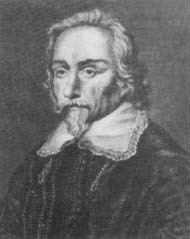
In 1609 Harvey was appointed to the staff of St. Bartholomew's Hospital. He was elected a fellow of the Royal College of Physicians in 1607. Harvey's ideas about circulation of the blood were first publicly expressed in lectures he gave in 1616. Harvey became court physician to King James I (ruled England from 1603-1625) in 1618 and then to Charles I (ruled England from 1625-1649) in 1625, a post he held until Charles was beheaded in 1649. Charles provided Harvey with deer from the royal parks for his medical research, and Harvey remained loyal to Charles even during the Cromwellian Civil War (1642-1660), in which the Parliamentarians who fought against the King ransacked Harvey's rooms and destroyed many of his medical notes and papers. Harvey retired at the end of the Civil War a widower. He lived with his various brothers and died of a stroke in 1657.
Harvey's Contribution
Harvey's great contribution to medicine was his revolutionary discovery of the circulation of blood. By dissecting both living and dead animals, Harvey became convinced that the ancient Greek anatomist Galen's ideas about blood movement must be wrong, particularly the ideas that blood was formed in the liver and absorbed by the body, and that blood flowed through the septum (dividing wall) of the heart. Harvey first studied the heartbeat, establishing the existence of the pulmonary (heart-lung-heart) circulation process and noting the one-way flow of blood. When he also realized how much blood was pumped by the heart, he realized there must be a constant amount of blood flowing through the arteries and returning through the veins of the heart, a continuing circular flow.
Harvey Publishes His Findings
Harvey published this radical new concept of blood circulation in 1628. It provoked immediate controversy and hostility from the medical community of the time, contradicting as it did the usually unquestioned teachings of Galen. The most virulent critic, Jean Riolan, scorned Harvey as a "circulator," an insulting term for a traveling quack. Harvey calmly and quietly defended his work, and although his medical practice suffered for a time, his ideas become widely accepted by the time of his death. The discovery of capillaries by Marcello Malpighi in 1661 provided factual evidence to confirm Harvey's theory of blood circulation.
In addition to his blood circulation research, Harvey was one of the first to study embryology (the study of reproduction in its earliest stages) by observing the development of the chick in the egg. He performed many dissections of mammal embryos at various stages of formation. From these experiments Harvey was able to formulate the first new theory of animal generation since antiquity, emphasizing the primacy of the egg, even in mammals. Prior to Harvey's work, it was thought that the male sperm was the primary source of new life, and that the egg was simply an empty home, so to speak, for the sperm to develop.
Thanks to Harvey's willingness to abandon old wisdom and observe and test for himself, we have our modern understanding of physiology.
but otherwise good.
Other than that it gave loads of info.!!
gave me a lot info for my science project
I found it really interesting as well and I will probably use this website again
and what other things did he achieve.
but thanks any way
Thanx a lot .
Thank You very Much